What does it take to make creativity a meaningful part of how communities support people as they age?
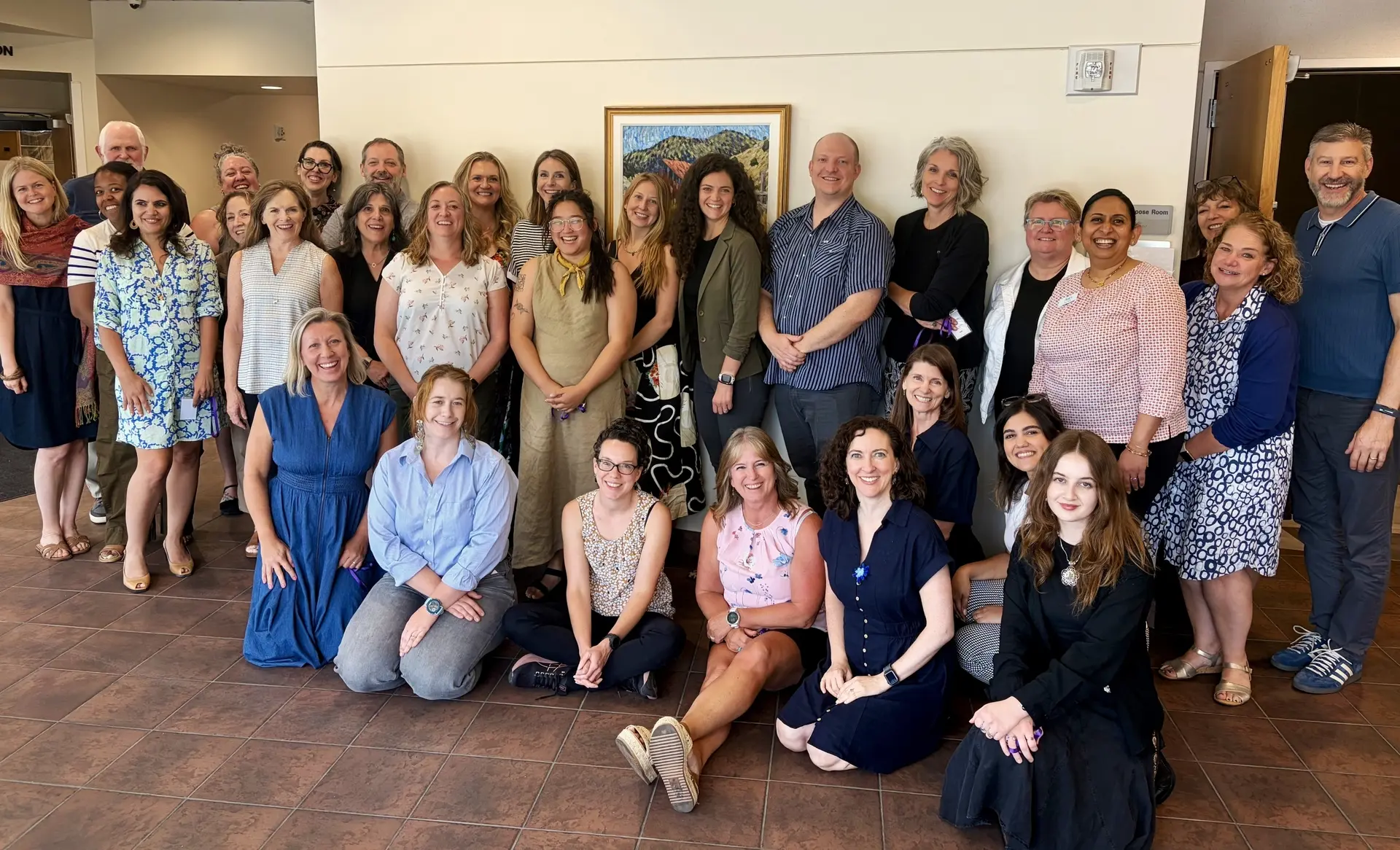
That question brought 48 state leaders from across the West together in Salt Lake City this summer for Lifetime Arts’ first Creative Aging Leadership Summit. They came from arts agencies, aging services, libraries, health, veterans services, and other sectors. Some represented states with years of creative aging work behind them. Others were just beginning. But they shared a larger goal: moving creative aging beyond individual programs and into the systems, partnerships, and policies that shape how people age.
The Summit grew out of Lifetime Arts’ work with Western states, but the lessons extend far beyond the region. Across the country, we are working with state and cross-sector leaders who are asking similar questions.
What we heard in Salt Lake City reinforced something important: states have a powerful role to play in making creativity part of healthy aging. And they don’t have to build a new system to do it.
Here are five lessons we’re carrying forward.
Lesson 1: Start with the priorities already on the table.

Brain health, social connectedness, and livable communities—these are already priorities for aging and health leaders across the country. Creative aging can help advance them.
That means the first question does not have to be, “How do we convince people to care about creative aging?” A better question may be: What does our state or community already care about and how can creative engagement help?
Every state has a state plan on aging. A growing number have multi-sector plans for aging, and hundreds of local communities are developing age-friendly plans. These are important places to make the connection.
In Colorado, for example, leaders are connecting creative aging with the state’s multi-sector plan for aging, identifying how the plan’s goals closely align with evidence-based outcomes of creative aging. In Oregon, where a multi-sector plan is taking shape, the priority is getting arts and cultural partners into the conversation early enough to help shape it.
The lesson: don’t create one more initiative if the work can strengthen something already in place.
Lesson 2: State agencies can be catalysts without carrying the whole load.
One of the clearest lessons from the Summit was that state leadership matters, but leadership does not necessarily mean paying for or operating everything.
States have assets that go well beyond grant dollars. They can convene partners, open doors, connect local and statewide networks. They build credibility, share evidence, and bring creative aging into policy conversations. And they signal to other investors, including community foundations and private sector partners, that this work is effective and matters.
Idaho offers a good example. Rather than building a new statewide delivery system, partners connected existing systems across arts, aging, veterans services, and libraries. Each brought something different to the table.
That changes the sustainability question from “How will the arts agency keep funding this?” to, “Who else should own and invest in this with us?”
For funders, there is an important lesson here, too: investment in state-level capacity can have an impact far beyond a single program. It can help create the relationships and infrastructure that allow many programs, and many future investments, to take root and scale.
Lesson 3: Build from relationships, not organizational charts.

Utah’s statewide creative aging strategy did not begin with a master plan, though creative aging is now included as a key strategy in their current multi-sector plan for aging.
This achievement grew through years of relationship building across sectors, seed grants for creative aging programming across the state, training for teaching artists and community-based organizations, and persistence. This kind of relationship building created readiness for public input during the development of Utah’s mult-sector plan for aging. People across the state were ready and prepared to speak about the value of creative aging and how it aligns with healthy aging priorities. Creative aging found its way into Utah’s multi-sector plan for aging. Along the way, networks that initially felt informal eventually became infrastructure. Early conversations among artists and local communities became a state-wide coalition that is now organizing its 2nd annual creative aging festival.
Utah leaders summed up their experience with two words: relationships and tenacity. We heard versions of that story again and again. One relationship can open the door to libraries. Another can connect the work to veterans. A local teaching artist can become the bridge into a rural community. One champion inside an aging agency can create a path into policy.
Systems change can sound enormous. In practice, it begins with one small step.
Lesson 4: Build with communities, not just for them.
Statewide does not mean one-size-fits-all. Rural and frontier communities may need different strategies than urban areas. Libraries, senior centers, parks departments, faith communities, veterans organizations, and other trusted institutions each understand their communities differently. And older adults themselves need to be part of shaping the work.
At the Summit, participants repeatedly came back to a simple principle: go where people already are and listen before designing the solution.
Montana is training practicing artists and craftsmen who already live in rural communities, rather than relying solely on artists who would need to travel long distances to lead programs. Idaho is looking at how to reach communities beyond Boise through local partners and existing statewide networks, including Area Agencies on Aging and AARP age-friendly communities. Nevada is developing local leadership, enabling regional creative aging coalitions in the northern and southern parts of the state to host listening sessions and engage multi-stakeholders in their roadmap for creative aging.
The goal isn’t to replicate the same program everywhere. It is to build enough statewide infrastructure so communities can create approaches that work locally.
Lesson 5: Pair the evidence with the human story.
Research, evaluation, and return on investment matters. As one Summit advisor reiterated, always pair: “a story with a statistic.”
States need evidence that shows how creative aging contributes to priorities such as health, social connectedness, and livable communities (including their economic viability). They also need the voices of older adults who can show what those outcomes look like in real life.
The return on creative aging isn’t only about whether an intervention reduces a particular cost. A more expansive view of value is also about what becomes possible when people remain connected, engaged, purposeful, and active in their communities.
For states and funders alike, building the case means capturing both. Our creative aging messaging guidebook is an excellent place to start.
The next step doesn’t have to be enormous.
By the end of the Summit, each state team had identified a shared priority for the next 12–18 months—and an immediate action to move it forward.
No one left with a perfect master plan. That was part of the point.
Throughout the day, we heard phrases like “radical incrementalism,” “just showing up,” and “it starts with one.” Different words, same lesson: statewide change is built through achievable actions that accumulate.
Map the partners already working on healthy aging. Invite a library leader into the conversation. Find out when your state aging plan will next be updated. Add creative engagement to an existing survey. Bring a health or aging leader to see a program. Talk with a community foundation before you have a funding request.
Then take the next step.
From promising programs to healthy aging infrastructure.
Lifetime Arts has spent years helping organizations and communities build high-quality creative aging programs. Increasingly, our work is also focused on what comes next: helping states create the partnerships, policies, and investment that allow those programs to reach more people and endure.
That includes our work with states across the West and across the country including Iowa, New York, Vermont, and elsewhere. The strategies differ because every state is different. The larger opportunity does not. As our population grows older, states and communities are rethinking what people need not simply to live longer, but to live well.
Creativity belongs in that conversation and building it into our healthy aging infrastructure may begin with something as simple as one new relationship, one existing plan, and one person willing to ask: Where could creativity help?
We can help you move that question into action. If your state or community needs support embedding arts learning and creative engagement into healthy aging plans and local initiatives, please reach out to us!
The 2026 Creative Aging Leadership Summit was made possible through the generous support of the May & Stanley Smith Charitable Trust and The Music Man Foundation.
Participating States:
- Colorado
- Idaho
- Montana
- Nevada
- Oregon
- Utah
- Wyoming
Summit Advisors:
- Andrea Camp, NeuroArts Blueprint Initiative and Aspen Institute (ME)
- Dianne Stone, National Council on Aging (VA)
- Gretchen Alkema, Wolf Eagle Enterprises (CA)
- Dr. Jill Sonke, Stanford University (NY)
- Megan McFerrin, National Assembly of State Arts Agencies (OH)
- Torshira Moffett, Center for Health Care Strategies (VA)